
How to email a hiring manager directly without it reading as spam
The move works because almost nobody makes it. What to send, what never to send, and how to find the right person and their address.

Horabbit
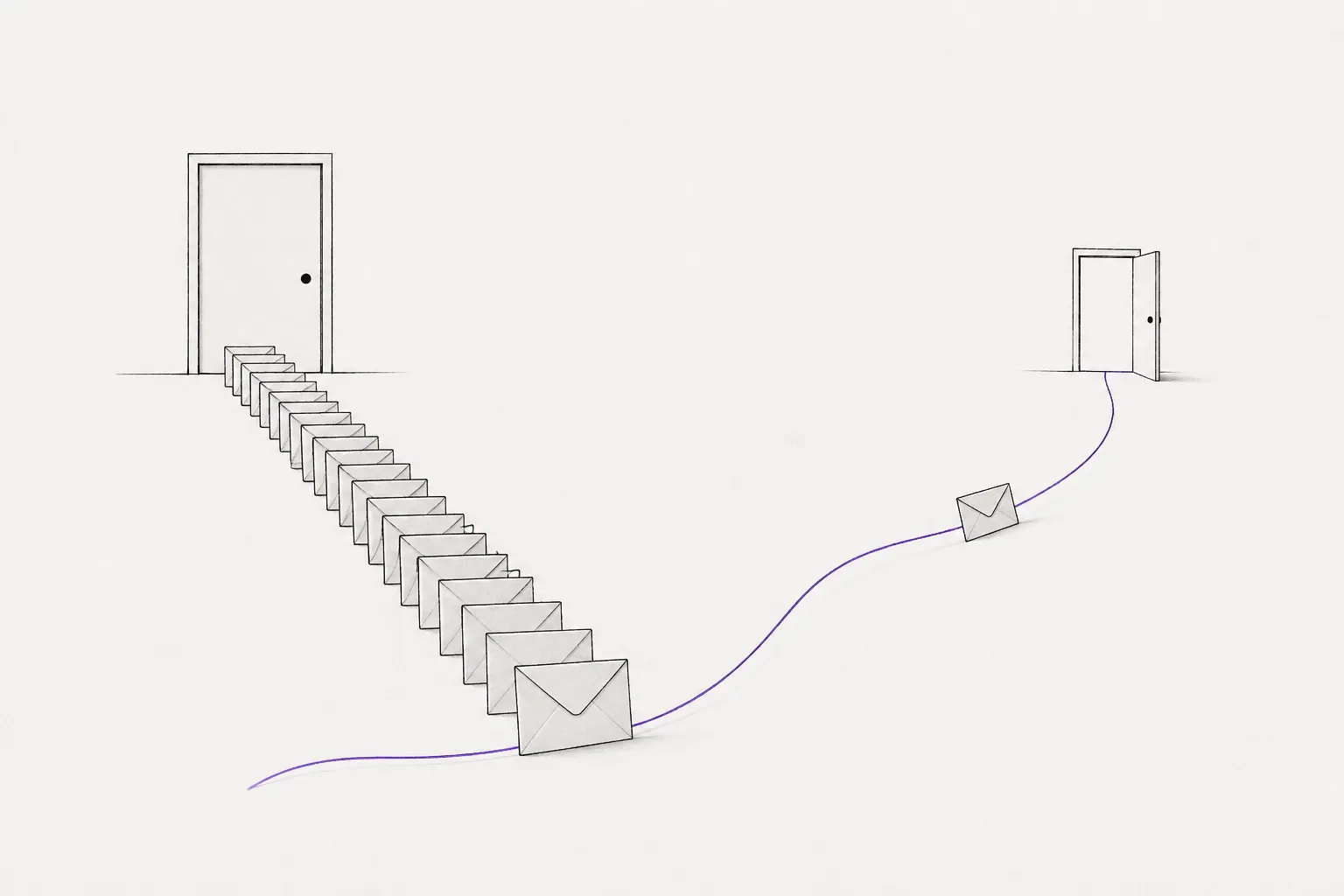
The short answer
Write to the person the role reports to, not the recruiter. Five to eight sentences, no attachment: one line on why them specifically, two or three on the single closest thing you have done, one on what you want, and one that makes it easy to ignore. Find the company's email pattern from a published address rather than guessing six variants.
Most people never send this email. Not because it does not work, but because it feels like a liberty. You are not sure it is allowed, you are not sure what to say, and the failure mode you imagine, being seen as pushy, feels worse than the silence you already have.
The silence is worse. And the email is allowed.
Who should you actually write to?
Not the recruiter. A recruiter’s queue is where your application already is.
You want the person the role reports to. For an engineering role that is usually the engineering manager or the team lead. For a marketing role, the head of marketing at a small company or the specific team lead at a large one. The test is simple: this person’s own week gets easier if they hire you. That is why they read email from strangers about it.
Finding them:
- The job posting itself often names the team, sometimes the manager. Read the whole thing, including the “you will report to” line.
- The company’s engineering blog, changelog, conference talks and open source repos have names on them.
- LinkedIn, filtered by company and title, is the obvious one. Look for who has been posting about hiring for that team.
- Press releases and funding announcements name the leads of newly funded teams.
Then the address. Most companies use one pattern for everyone: first.last@, first@, flast@. Find one real published address for the company, an engineer on a mailing list, a press contact, anything, and you have the pattern. Do not guess and fire six variants at once. A bounce is fine. Six bounces to the same domain is a spam signal, and it can hurt your ability to reach anyone there.
What should the email say?
Short. Five to eight sentences, no attachment on the first email, no “I hope this email finds you well”.
The structure that works:
Line one: why them, specifically. Something true that took you more than a glance to find. “I read your write up on cutting the checkout latency in half” or “You are hiring three backend people at once, which usually means something just changed.”
Line two to four: the one relevant thing you have done. Not a career summary. The single closest piece of evidence, with a number if you have one. “I did the same migration at a payments company, moving 40 services off a shared database over six months.”
Line five: what you want, stated plainly. “I applied through the site last week. If it is useful, I can send the two page version of how I would approach your first ninety days.”
Line six: an easy exit. “If this is not your area, no reply needed.”
That last line matters more than it looks. It converts your email from a demand into an offer, and it is the difference between confident and pushy.
What gets the email deleted?
- A wall of text. If it needs scrolling on a phone, it is not getting read.
- Flattery with nothing behind it. “I have long admired your innovative culture” is a tell that you know nothing about them.
- Your entire CV pasted below. Link it or offer it. Do not dump it.
- Anything automated-sounding.
Dear {{first_name}}, or an opening sentence that would fit any company in the sector, is worse than not sending it. Both destroy the one advantage the email had. - Asking for a call before giving anything. “Do you have 15 minutes this week?” from a stranger is a cost with no stated benefit.
- Repeat sends. One follow up after five to seven working days, one paragraph, adding something new. Then stop. Two is the limit that keeps you welcome.
Is it going over the recruiter’s head?
Is this going over the recruiter’s head? Slightly, and that is normal and expected. You are not bypassing a process, you are applying through it and separately telling the person who owns the role that you exist. If the manager is interested they will route you back through the recruiter, which is exactly what you want.
What if they ignore me? Most will. This is still a far better ratio than the queue, because a non reply costs you fifteen minutes instead of feeding a pile of two hundred.
Is this cold outreach spam? Spam is identical messages at scale to people who have no reason to hear from you. One specific message to a person who is publicly hiring for a thing you have done is the opposite of that. The distinction is real and readers feel it in the first line.
Which channel should you use?
Email, not LinkedIn DMs, not WhatsApp, not their personal phone. Email is the professional channel people expect to receive unsolicited but legitimate messages on, it threads, and it does not put your message next to recruiter spam in a notification tray. If you only have LinkedIn, a connection request with a two sentence note is acceptable. Nothing else is.
Where does this fit in the bigger picture?
This is one of five reasons applications die, and it is the one with the best ratio of effort to outcome. The others are in why you are not getting interviews, including the one where you were never in the running at all.
Horabbit does this end to end: verifies the person is real and the address resolves before anything is drafted, writes the message from your own history, and sends it from your address only after you have read it and pressed send. It never sends on its own, and it never claims a skill your resume does not support.
Questions people ask
- Is it unprofessional to email a hiring manager directly?
- No. One specific message to someone who is publicly hiring for work you have done is normal professional contact. What reads badly is a generic template, a wall of text, or repeat sends.
- How do I find a hiring manager's email address?
- Find one real published address at the company, a press contact or an engineer on a mailing list, to learn the pattern, then apply that pattern. Do not fire several guessed variants at the same domain.
- How long should I wait before following up?
- Five to seven working days, once, in one paragraph, adding something new. Then stop. Two messages is the limit that keeps you welcome.